



Logistica Rama
A component can be indispensable for the progress of an energy installation. Logistics planning must consider its transport, route, and delivery sequence.
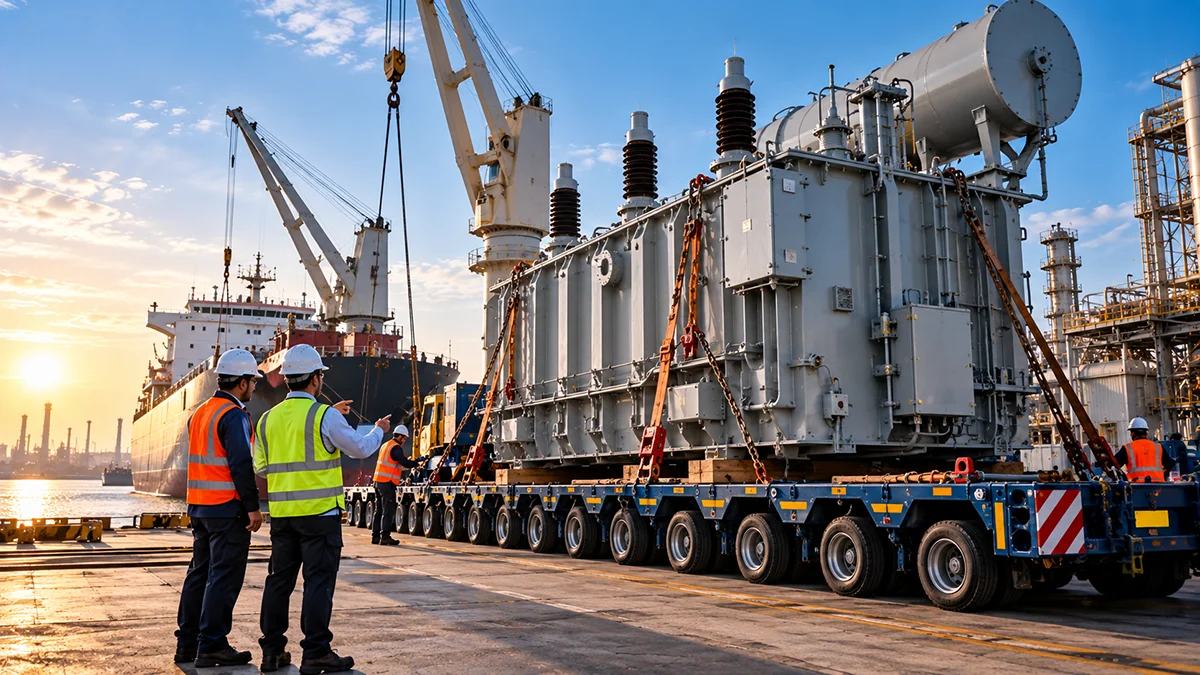
Energy and infrastructure projects depend on the coordinated availability of specialized equipment, materials, and components. A transformer, a tower section, a generator, or an electrical component can have an indispensable function within a facility.
When these elements have to travel long distances, cross borders, or reach a location with specific access conditions, logistics becomes an essential part of project planning.
It is not enough for the merchandise to arrive in the destination country. There must be a strategy to transport it from its point of origin to the place where it will be installed.
The delivery must align with the project schedule
In an industrial or energy project, different activities often depend on one another. The installation of equipment may require that the foundations, access roads, cranes, and specialized personnel are ready beforehand.
Delivering too early can create additional storage and handling requirements. Delivering too late can disrupt the sequence of activities.
Therefore, logistics planning must consider target delivery dates, site conditions, and coordination with project managers.
The factors that define a logistics strategy
Component characteristics. Weight, dimensions, center of gravity, lifting points, and protection requirements influence the selection of equipment and handling methods.
Origin and destination. The location of manufacturers, available ports, land connections, and site access conditions can determine viable alternatives.
Selection of the mode. Maritime, land and other multimodal combinations should be evaluated according to the cargo, routes, schedule and operating conditions.
Delivery sequence. If the project requires several components, it is advisable to review how the arrival of each one relates to the installation activities.
Coordination of maneuvers. In certain operations, loading, unloading and placement maneuvers require specialized equipment and prior coordination with the receiving site.
The route is part of the solution
The route should not be considered merely as a line between two points. For certain components, restrictions on height, width, weight, turning radii, infrastructure, and access may affect ground transportation.
When dealing with special loads, it may be necessary to study the route, review applicable restrictions, and obtain the necessary permits before starting the movement.
Feasibility should be assessed using technical information about the load and the actual conditions of the route, not just an estimate of distance.
Coordinate before mobilizing
A logistics strategy for energy projects requires communication between the client, suppliers, carriers, and those responsible for the installation. Advance coordination helps identify dependencies, evaluate alternatives, and prepare for critical stages.
Rama International Logistics offers international transport and logistics coordination solutions for operations that require planning adapted to the characteristics of the cargo and the project.
Are you developing an energy or infrastructure project? Contact Logística Internacional Rama to assess the transportation needs of your components and plan the operation from origin to destination.
International Logistics Branch. Logistics specialists for projects that push the boundaries.